Lexie Conyngham's Blog: writing, history and gardening.

Thursday, 6 November 2025

October's book

I find that at the end of October I'm halfway through several books, which will have to wait till next month's blogpost! And I'm afraid there's not a lot of variety here as I continued with a series I had not met until September, and am thoroughly enjoying. Anyway, take a look!

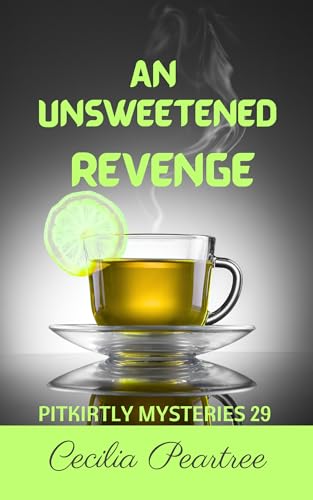
Cecilia Peartree, An Unsweetened Revenge: The twenty-ninth in the Pitkirtly series sneaked out under my radar a few months ago, and once I found it I plunged straight in. Though Christopher is away (we do get some chapters on what he’s up to, poor chap), the gentle council satire is alive and kicking, and I loved ’the computer screen, which currently displayed a West Fife Council screensaver with a carousel of images of recent road-mending projects.’ The plot itself is a little darker than usual, but of course all is well in the end and the people of Pitkirtly can carry on being as quietly mad as ever.

Natalie Jayne Clark, The Malt Whisky Murders: I found the initial premise, that two women would conceal the fact they’d found several bodies in whisky barrels in their newly bought distillery just because it would affect their business launch, very difficult. All right, maybe there are people like that, but I don’t necessarily want to spend time with them. However, the story improved tremendously and there’s a real sense of knowledge of the whisky industry, too, which works well. Eventually I came to see that the way the narrator reacted to the bodies is part of her own character, and by then I was already involved in the investigation. I could see the who, but not necessarily the why, which was presented at the end in a fairly convincing way, in the context, even if it fell a little flat. I’ll be interested to see what she writes next.

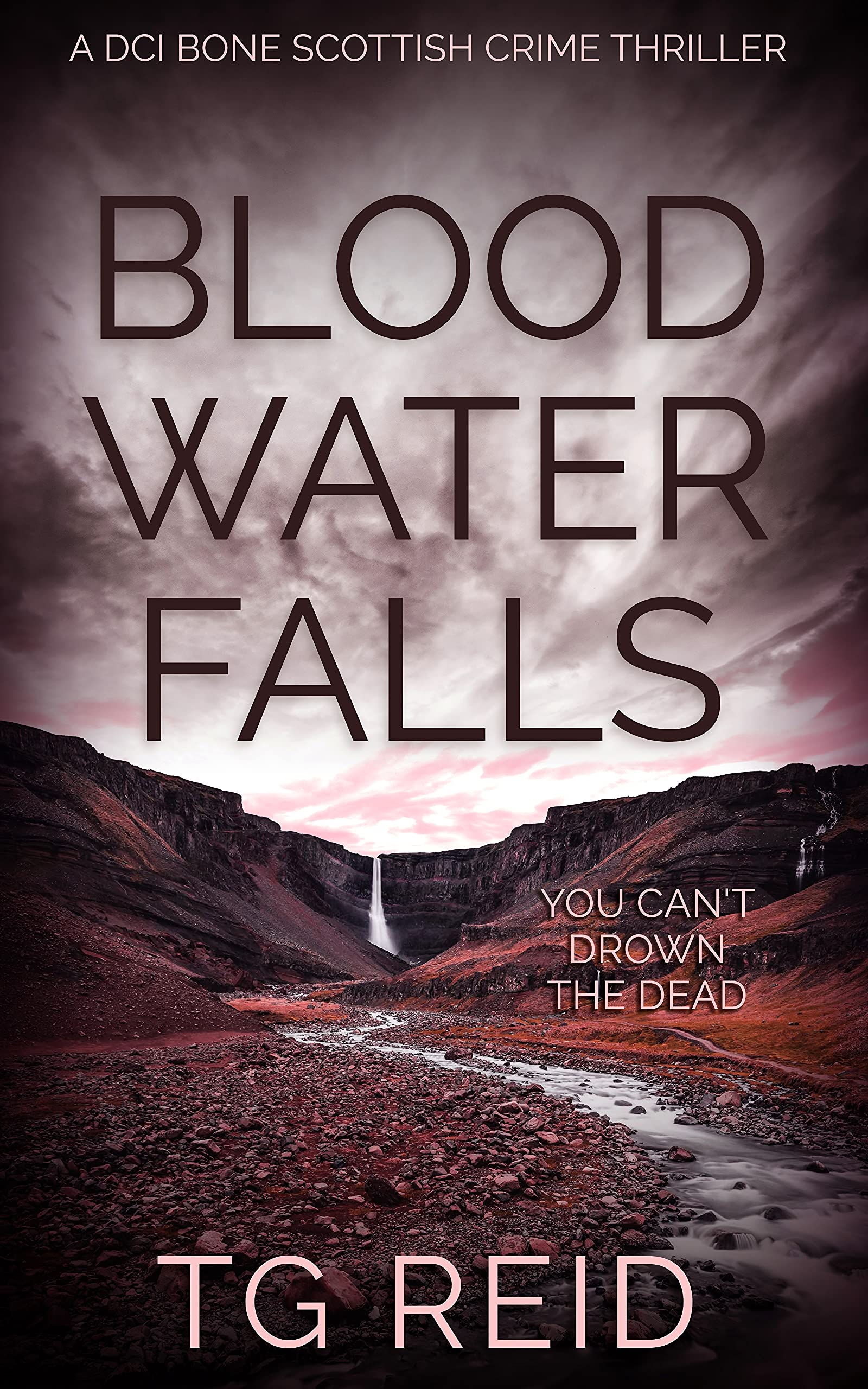
T.G. Reid, Bloodwater Falls: a few odd words like kneeled and shined, and a lot of wandering speechmarks, but really I enjoyed this. The tension over his son and ex-wife is a good layer, and though I spotted the killer quite quickly it was an interesting read.

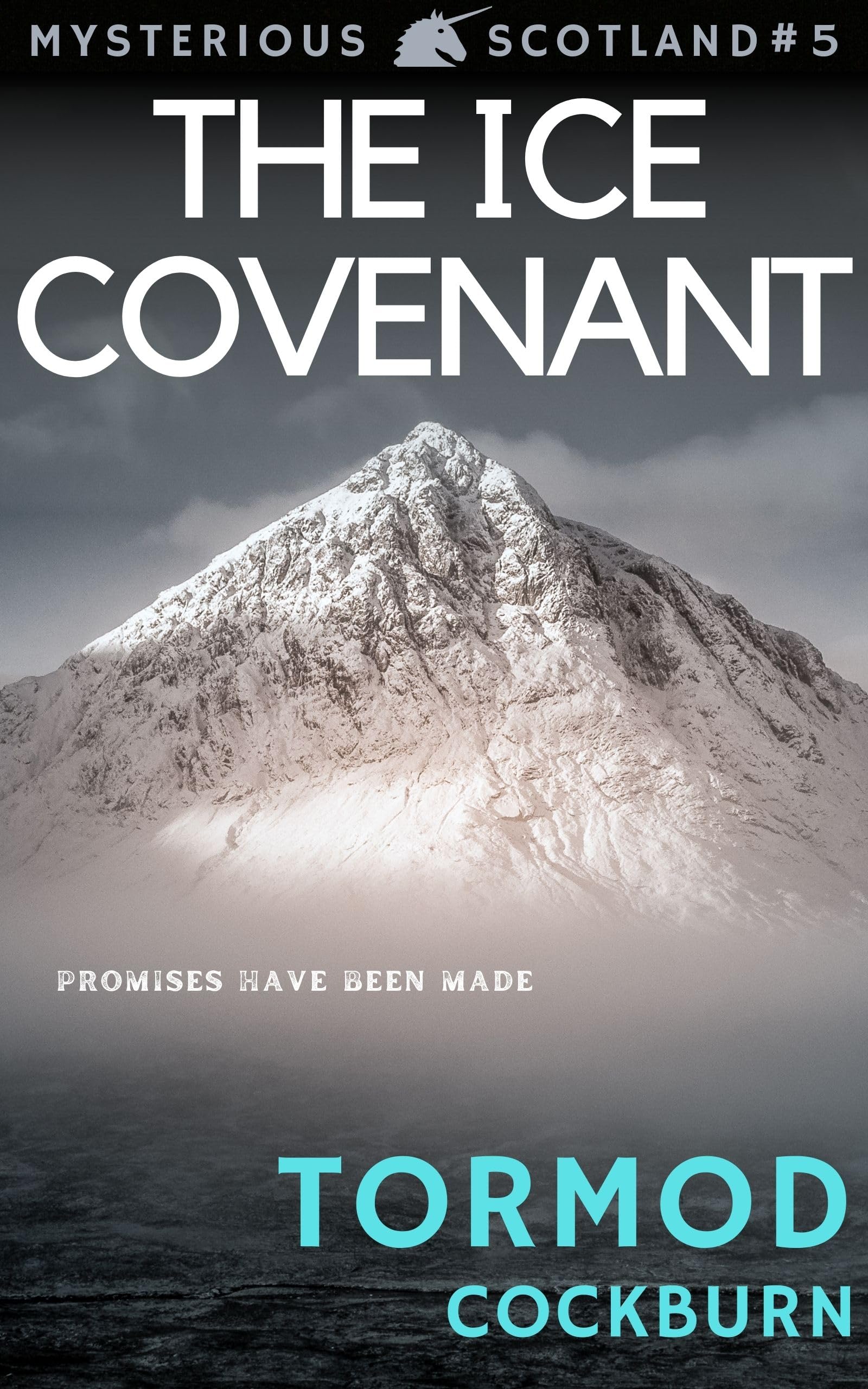
Tormod Cockburn, The Ice Covenant: All gloves are off now and Gill is definitely on a supernatural mission, guarded by an angel-like biker. Nevertheless, he has to get on with his career and though the reader knows a little more about the angel, Gill is still an archaeologist at heart, taking on a rescue dig around Killiecrankie. Meanwhile, on the alarming mountain of Ben Macdui (which I for one never want to climb), there has been a discovery of quantities of human teeth, deposited, or strewn, over several decades. The answer to that mystery is just as disturbing as the discovery.

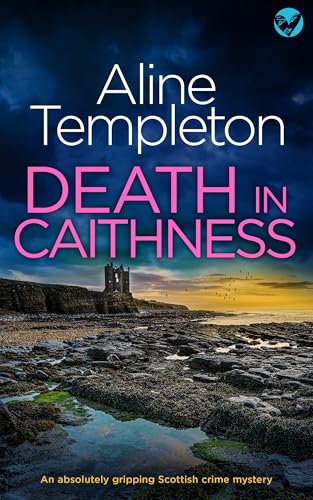
Aline Templeton, Death in Caithness: Once again, the setting in the Flow Country was very well portrayed and I very much enjoyed the continued relationship between Murray and Strang. The local DI was maybe a little overdone but he was still horribly entertaining and well due his come-uppance, and though I spotted the murderer early on, I still very much enjoyed the read. I’ll certainly carry on with this series for now.

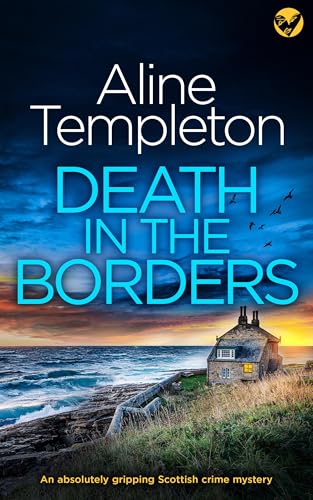
Aline Templeton, Death in the Borders: And again the setting is good and the intrigue of the reclusive writer is well done. I did like ‘The music made satisfying patterns in his head’ – I could relate to that. The weather is a key part in the plot and Murray and Strang continue to bounce off each other. A very satisfying mystery, and I’m afraid I’ve already bought the next one – doesn’t often happen that a series grabs me this way.

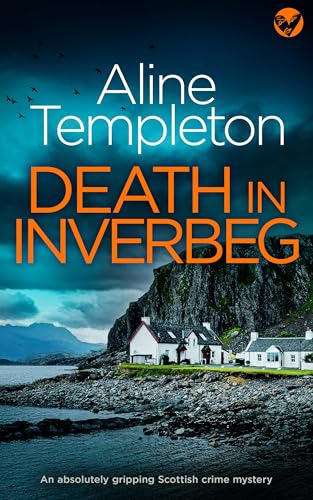
Aline Templeton, Death in Inverbeg: All right, yes, another one. Another thing about them is that the characters are very well drawn and layered – I find my sympathies unexpectedly engaged by people I’d previously thought horrible – but again this one has a fine sense of place. What fun to travel around Scotland setting murder mysteries in different places!

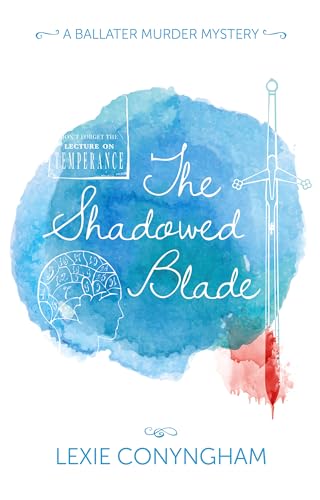
And where am I? Not Inverbeg, anyway - I've left Ballater for a week as I finally managed to finish the first draft of The Shadowed Blade! Now I'm taking a break before going back for the first big edit. 

Tuesday, 7 October 2025

September's reading

A bit of variety this month, and some really excellent reads - hope you find something to your taste! 

P.G. Wodehouse, Meet Mr. Mulliner: I do like a bit of Wodehouse and I picked up two in a giveaway. I hadn’t read any Mr. Mulliner ones before, and the general theme is how all members of the Mulliner family are both clever and fortunate, and everything works out for them in the end in illustration of Mr. Mulliner’s own theories of life. I particularly liked the one where the young man is locked under the stairs by his old nanny, but the last one is also very good, where a writer of dark crime fiction inherits a house from a romantic novelist and finds its atmosphere affecting his own writing, with almost disastrous results. Very witty, and a good, cheering, episodic read.

Patricia Finney, Do We NotBleed?: I very much enjoy this author’s Sir Robert Carey series, and Sir Robert’s name appears in this book – as does Shakespeare’s, or Bald Will. The period setting is very natural and the main character’s problems switching back and forth between appearing as a widowed, scarred woman and the woman’s ‘brother’ are both realistic and funny, and you can just see Shakespeare taking notes. Nevertheless, the murders are tragic and horrific.

Barbara Stevenson, The Clockmaker of Perth: The lead character of this book, indeed the eponymous character, is wonderfully horrible – a man who has locked his first wife in an asylum and pretended she is dead, is having an affair with a second woman with whom he is plotting to kill the first wife, and living with a third woman who believes herself lawfully married to him – and then takes up with a fourth woman masquerading as his shop assistant. The stress of building a clock to fit inside a fantastical casing for a grand Perth hotel, along with other events both tragic and happy, begins to knock him over the edge, and his carefully constructed life starts to fall apart. Ironically, the only woman he seems to care for and respect in this whole shambles is his first wife. Will he find redemption there, or will he get everything his selfish, self-centredness deserves?

Irina Shapiro, The Highgate Cemetery Murder: American spellings and emphasis (not to mention a boy called Hank, which is possibly fine in a Jason Vail book but not in a Victorian one), and a bit of a misunderstanding of the 1832 Anatomy Act. Hyoid is Greek, not Latin. I wish people would not confuse envision and envisage. But the atmosphere is good and the sense of period is quite convincing so far, aside from the American usages.

Lexi Revellian, Remix: I had not read one of this Lexi’s books for years, but her Ice Diaries had stuck with me along with a couple of very funny books. This one drew me in quickly and the heroine is a maker and mender of rocking horses, which has to be a first for me for a mystery. I enjoyed the fairly gentle thriller with its humour and romance – and it’s made me want to read more of Lexi’s quite mixed oeuvre.

Marty Wingate, A Body on the Doorstep: Homburg? Why did she go to the front door as a servant? And more Americanisms, many of them class-related, though the main character began to grow a little on me. The police activity is rather American, too – when a body is found, they hear distant sirens (not bells) and several police vehicles turn up, rather than a bobby and maybe one car with an inspector. I didn't care much about most of the characters, but it made a reasonable light read.

David Gatward, Death Springs: The next in the Gordy Haig series, and I think it’s finding its feet nicely. There are some good twists and turns here and just a touch of the supernatural, and though I haven’t yet warmed to the team here as much as to the one in Yorkshire, it’s coming along.

Rhys Dylan, No One Near: Thoroughly readable next installment in this series, as Christmas looms and the team try to fit in an investigation of a particularly nasty murder around it.

Aline Templeton, Death on Skye: I really enjoyed this. It’s a new writer to me and I can’t work out (a) how I came across her and (b) how I haven’t come across her before. I’ve read a few other books set on Skye but this one somehow brought the place across to me more than the other ones did. The characters were nicely judged, sometimes easy to sympathise with, sometimes easy to detest, sometimes both together. For once I bought the next in series straight away – looking forward to it.

Andrew James Greig, The Bone Clock: I’m not sure what it was that put me off this one, as I’ve enjoyed other books by the same author. Eventually I made myself go back to it, and was drawn in to a good mystery. Unfortunately again there’s the well-worn trope of brutal nuns hiding the bodies, and I was a little muddled over the minister who seemed to be a priest or vice versa – don’t meddle with the church if you can’t get the terms right! But the characters were quite well drawn. It was a little confusing to read two books concurrently where the main detective was recently widowed, but that’s my own fault and I just had to get on with it. I wasn’t really convinced by the cover-up for some minor peer and his cronies, though, nor by the confusion of Sir Reginald and Lord Lagan – which was he? And really, the peers with money these days tend to be the non-hereditary ones. However, in the end the solution was fairly satisfying and most of the clues had been laid out for the reader.

Abir Mukharjee, Hunted: What a superb book. It’s not my kind of read, an American terrorist thriller, but once I got into it it was very hard to put it down and I found I was thinking about it even when not reading it. It’s a twisty, turny kind of plot and in places very emotional – two parents who have ‘mislaid’ children who have apparently joined an Islamic terrorist plot join forces, and are in turn suspected by the FBI of being terrorists themselves. The FBI agent goes through a journey of her own before the end, trying to work out who to trust and how to cope with her family who seem to love her despite her. Jump in, pay attention and enjoy.

Val McDermid, How the Dead Speak: I’ve leapt to a later episode in this odd series, but enjoyed it better than some of the earlier ones I’ve read. There are a few threads here but they are all quite enticing, though the old one of abusive nuns is perhaps a bit overdone (that’s not to say it didn’t happen in real life in some instances, but it has become a well-worn feature in crime fiction). Very well written, as always, with complex characters and, in the end, an interesting plot.

Progress of my own? Well, a little. This book, The Shadowed Blade, should have been finished at the end of September, but it isn't. But I haven't given up yet, and the cover is due this week!

Tuesday, 2 September 2025

July and August reading

 There, I was so excited at the idea of going on holiday in August that I completely forgot to post about July's reading! So (if No.3 Cat permits, since he's trying to sit on my lap and stop me) here, in no particular order, are the books I read over the two months.

Marti M. McNair, Island of Ruin: This is really a YA dystopian fiction and starts with the discovery of an old woman apparently dead on a beach. The setting is a strange community on an island after some disaster, and the world-building is swift but effective – decontamination, communal living, strict regimes to protect the community. The main character is tantalised by glimpses of what the world is like beyond their little community, and alarmed at the prospect of being drugged, like everyone else, to quell emotions once she reaches puberty. A rebel, she gets into plenty of trouble in the course of the book, and the ending is well set up to lead on to the next in the series.

Brian Bilston, Diary of a Somebody: This is a novel by the well-known social media poet (I suppose one could call him – I certainly first came across him on Facebook), though at first it does seem like the actual diary of a year he challenged himself to write a poem a day. How much this is really based on real life I’m not sure: the narrator is a divorced loser, failing in his relationship with his teenage son, overwhelmed by the positivity of his ex-wife’s new partner, fading out of his paid employment, not reading the books for his book club and in misery at his poetry club where his arch rival is striding towards literary stardom. As one would expect from his poetry, this is funny and witty, with all kinds of literary references and, it turns out in the end, an actual plot, when the arch rival vanishes and Brian is clearly up to something in his garden shed. A light read that’s great fun and can lead you down a few erudite rabbit holes.

Kate Ellis, The Burial Circle: I very much enjoy this series where there’s always an archaeological element and a double time line of some kind. In this one there’s the additional factor of an old case in the area, a body being found from a decade before. The way the various threads are woven together is very clever, and even though I picked up on a fair few of them the final solution was still a very interesting, character-driven conclusion. My only complaint was that the old letters represented in the text were in a font I found quite difficult to read, and I’m someone who will happily plunge into centuries-old manuscripts.

Marsali Taylor, Death in a Shetland Lane: I’m just trying to catch up on the ones I’ve missed in this series as I became confused when some of them changed their titles (thank you, www.fantasticfiction.com for getting me back on the right track!). Another excellent plot with engaging characters.

Barbara Erskine, The Story Spinner: I have loved this author for years and was delighted to find another book by her. She weaves history, thriller and the supernatural together in plots that seem totally grounded in the present day, and her writing is really compelling as she lures you in. Yes, there are some really rambling sentences, and yes, I did yell at the main character and the police now and again as she put herself in danger and they once more chased the baddie without catching him, but it’s a great yarn, all the same.

T.G. Reid, Dark is the Grave: I had started this some years ago but couldn’t get past the beginning which I found a bit much. However, this time I persevered, and enjoyed it – a good solid police procedural with a satisfying plot and a team it was interesting to spend time with. I hope to be back for another one.

Wes Markin, Forgotten Bones: Another policeman constrained to work with someone on the spectrum, and with domestic problems of his own. I haven’t quite warmed to Frank yet, though I might well give him another chance. The plot was reasonable enough, starting with the discovery of old bones in a suitcase in Whitby and working out from that several threads where different characters receive their come-uppance. I felt the setting didn’t get the outing it perhaps deserved and I was never quite sure where we were. Perhaps just me – I’ll try again. I disliked the chapter headings intensely, though.

J.D. Kirk, A Rock and a Hard Place: The suspense brought on by Logan’s incapacity at the beginning of this book is agonising! Will he come back to work at full strength, or won’t he? The team are as wonderful as ever and the plot is pleasantly convoluted, and there’s the usual out-loud laughter and terrible groans – excellent read.

Hilary Pugh, The Laird of Drumlychtoun: My first by this author and I might well go and look at another one. I couldn’t quite fathom the main character, but I quite enjoyed the plot – a missing ring supposed to affect the fate of a landed family near Dundee, resulting in various family relationships rearranging themselves. The whole thing was – I’m not sure – oddly paced? But it kept going and I did keep returning to it.

Val McDermid, The Torment of Others: This is my first Tony Hill / Carol Jordan book, and for some reason I'm approaching with care, perhaps because I'm never very happy with something that’s been televised (not that I watched it). As it turned out, while I found the relationship between Hill and Jordan a curious one, the plot itself was grim. I’m not sure I enjoyed it as such, though I’m pleased it was resolved in the end. I’d acquired a number of Val McDermids in one go and as a result of reading this, as it turned out, out of order, I’m going to give the previous one straight to the charity shop without reading it. I will, however, try another Hill / Jordan one – I just felt the plot of the previous one was touched on too much in this one for me to be able to read it with any kind of interest.

Alex Walters, Nothing Left of Me: Another intelligent standalone from this author, one of the few where I will pre-order a new book on sight, without reading the blurb! I love his Alec Mackay and Annie Delamere series, but his standalones are equally good. My favourite may be Winterman, set in the 1940s. Nothing Left of Me is the story of a newly-ex police officer retreating to the Highlands for a bit of peace and quiet, only to find that there are plenty of problems there, too – but are they local or have they followed him? I very much liked the main character, a narrator who is far from omniscient, and there are some nice little references to some current real-life situations as we go along – maybe even closer to the bone than the author expected.

Jodi Taylor, Killing Time: This Time Police episode, with Team Weird still very much dysfunctional, is based around the ‘true’ story of the Zanetti Train, which apparently vanished in a tunnel near Milan in 1911. This is quite traumatic and a very emotional read in places, and I really wasn’t sure how it would turn out, but as always there’s a laugh and a joke as we go – the rapid-hardening string was particularly amusing!

Alex Mackay, Late Checkout: My first in the Kenny Murrain series, avoided so far because I’m not so interested in the setting. It feels as if a number of Scottish crime writers depart from Scotland at points and gravitate towards Manchester, which does not appeal so much to me. However, this one, with its sympathetic main character and his strange second sight, is one I’ll come back to. A series of nasty murders in hotel rooms leads to extreme danger for Murrain's colleague, but what is the link between them?

Jason Vail, The Abbot’s Last Supper: Now, it’s unfortunate that the author mentions a spinning wheel in the first few pages, for it’s very unlikely that there was one in use in an ordinary house in 13th century England, and I’m the kind of pedant who would look that up. This author’s work can sometimes head too much into the politics of the time for me, but The Abbot’s Last Supper is one of the kind that suits me better, a more domestic murder.

Carmen Radtke, Axes and Alchemy: This series is getting into its stride already, and I’m beginning to feel I know the community in Willowmere rather better. The setting is delightfully cosy, despite its occasional murder. Cosmo is wonderful, very feline. I’ll maybe need a few more episodes if this is going to win my heart over from Genie and the Ghost, but it’s very charming!

Alison O’Leary, Home CatBlues: A nasty poison pen writer is making life miserable around Jeremy’s school, and then it goes too far. These are charming books where the very normal cats (not talking or magical, though that can be fun, too) lead the usual cat-lives, parallel to humans, and humans and cats see the plot unfold side by side.

Now, confession time: the new Hippolyta, The Shadowed Blade, is going incredibly slowly. Every time I think 'Oh! That's it, that's the solution!' it bounces along for about three chapters, then deflates again - or maybe it's me!

But I think it's time I got the message, and went to feed No.3 Cat. He has been remarkably patient while I've been doing this!

Monday, 7 July 2025

Books from June

 The sun is shining, the wind is blowing, the bookshelves are groaning ... Here's what I read in June, apparently!

Carmen Radtke, Funerals and Familiars: This, the first in a new series, is very much in the Radtke style and as usual very enjoyable – Bex, recently divorced and heading for middle age, finds herself the heiress to her aunt’s lending library, secret witchcraft den, and talking cat, as well as the necessity to investigate a murder on which the community is divided – will he be missed, or not at all? There are plenty of red herrings, of various kinds, and a gang of locals I look forward to getting to know better. I liked Bex and Cosmo very much, and rather envied the talking cat and a library lifestyle! 

Marsali Taylor, Death at a Shetland Festival: Set around the Shetland Folk Festival this starts with a mysterious diary and carries on with a death backstage at what sounds like a great gig. Cass and Gavin are finding their feet living with each other, but sailing is never very far away, of course, and nor are the wonderful cats. I’d been looking forward to this book since I read the first few lines a couple of years ago, and it didn’t disappoint – another tightly-woven plot with a clever historical (if the 1980s are historical) background. Very good indeed.

Simon McCleave, The Snowdonia Killings: We have the classic city cop heading for the wilderness to escape city pressure and a personal tragedy here, but I did like the cop in question, and found she was neither too idealistic nor too dismissive of her new situation. I also liked the growing relationship between her and her alcoholic sidekick, which I found interesting and realistic.

Val McDermid, Blue Genes: A very amusing start, if frustrating, as Kate Brannigan tries to trap a dodgy seller of headstones and is in turn trapped into trying to find out who is destroying the reputation of a Glasgow neo-punk band in Manchester. This is my first Kate Brannigan book, but I know I’m in safe hands with McDermid, as she explores the murky world of ‘test tube babies’. I think a similar theme appeared in a Taggart episode about a decade before this book was written, but it’s taken in a different direction and, of course, written very well.

Eva St. John, Flint in the Bones: A crime novel, I suppose, set in an alternative England where magic is practised and Norwich has a very bad reputation for temporal earthquakes. Our heroine, a native of Norwich, is sent back in pursuit of a renegade magician. She’s an uncomfortable sort of person but appealing, up to a point. The Norwich setting is intriguing, with people from various periods of history trying to co-exist and work together, while the town basks in the wealth from selling all kinds of historical goods. This is a fascinating book, with excellent world-building and entertaining characters, and I look forward very much to the next in the series. And yes, bring Harry along with you! N.B. This is another pen name for the author who writes the Golden series of crime fiction, Anna Penrose.

Cecilia Peartree, Heiress in Exile: Lord George, a lazy pleasure-seeker, has been sent off to Cornwall to find out what’s happening at a friend’s long-abandoned house, ‘Goose Chase’, and discovers a new sense of responsibility. Next door, a distant acquaintance, Susan, has been sent to live with a great aunt to get her out from under the feet of a new stepmother, and to help with three unappealing children. Between them they discover a cache of weapons and gunpowder, and attempt to unravel the mystery of their appearance, as well as some suspicious goings-on in Susan’s family. Lovely, satisfying romantic mystery.

Jane Smith, Three Times Buried: This is based on a real murder story in 19th century Aberdeenshire, imagined as a novel. Apart from a strange fixation on one particular piece of furniture it’s a very compelling tale, well set in its historical context and fascinating in its account. Smith gets inside Widow Lovie’s head beautifully, while also portraying the other characters, even the minor ones, with telling detail. Much better than some well-known novelisations of old crimes.

Alex Howard, The Ghost Cat: Rather a nice little book, this, recounting the tale of a cat and his tenement flat in Edinburgh over the course of 120 years. In some ways it’s too short, and I’d have liked a bit more about the earlier years and less focus on the last thirty or forty, but it’s charming. However, it does need some more work – there are inaccuracies, quite anachronistic uses of language, and plenty of places where the wrong word is used, and it comes over at the end as a little self-indulgent bit of poor self-publishing. Still, it portrayed the setting with great affection and I did feel I knew the flat by the end.

Susie Fleming, Blood Ties: When anything is described in the subtitle as ‘utterly addictive’, it immediately makes me feel unaddicted. This is interesting enough but not at all addictive – in fact, I kept forgetting I was reading it. The main character is a kind of Vera by Anne Cleeves, though with some sympathy-inducing family issues and a lovely ex-husband. The Yorkshire tea thing is a bit ridiculous. When Viv doesn’t like a witness, I find myself siding with the witness, which might not be what the author intends. There’s the occasional bit of head-jumping which is off-putting, and as many people will no doubt say, British police should not be addressed as ‘Detective’. There are also a few typos and grammatical errors (whose/who’s, etc.), but I think my favourite bit was a character called Campbell Baxter whose nickname was ‘Two Soups’.

Jodi Taylor, Bad Moon: Though I love the St. Mary’s and Time Police series, not to mention several other books (does this woman not let up? Thank goodness she doesn’t!) this is my favourite of Taylor’s series, and I’ve been waiting for this one with bated breath. And it did not disappoint. Action, emotion, humour, a troll in the cellar and a really big snake – brilliant.

Martin Edwards, Sepulchre Street: I started to read this in the A.K. Bell Library in Perth when I had an hour or two before a train. I liked it so much I went back and read another chunk the next time I was waiting for a train in Perth, and at last bought my own copy. It’s a very enjoyable take on a Golden Age crime novel, though there were a few points when I thought it felt much less 1930s than it was supposed to. The main detective is the intriguing, wealthy but damaged Rachel Savernake, and the book is told from the point of view, mostly, of a bewitched young reporter who is a not-very-bright Watson to her Holmes. I believe there are others in the series and I might well dig them out – or look for them next time I’m in Perth.

Kathy Reichs, Monday Mourning: Quite a disturbing one in the Tempe Brennan series, with the discovery of three skeletons who turn out to be young female abductees, victims of a serial killer or killers. With the additional challenges of her on/off boyfriend Ryan’s odd behaviour, the disappearance of her old friend Anne, and the Montreal winter, this is another tough case for Brennan. I was a bit surprised that Carbon 14 and isotope analysis were news in this one but perhaps my memory is playing tricks, and this was published twenty years ago.

Andrew Rudd, The Quiet Path: Illustrated with simple little pen-and-ink drawings, this is a book where the author invites you to dip in as you feel like it, but there is advantage to reading it in sequence, and slowly – pausing for thought, ideally, at the end of each page. It’s divided into three sections, walking, seeing, and writing, and each section offers passages of prose and poetry that look more closely at ordinary things, leading you into quiet contemplation whether of birds, or of the landscape. In fact, he suggests the possibility of treating all these encounters through the practice of Lectio Divina, close study, uninterrupted by the demands of the modern world for a few moments. The book was written post-pandemic, and includes reflections on some of the quiet times lockdown offered. It’s a book that makes you think more about the world around you, but also about using that enhanced thought to come to a greater understanding of God in ourselves and in the world. Though in fact, whether you were religious or not, I think you'd find a good deal of calming thought and gentleness in here. Don't know why the link has spread over the whole review, though! (I need to think more calm thoughts).

Jerry Dye, Island Wars: Well, it hits the ground running with a brisk and savage murder and then a kidnapping. There are a few wrongly used words, quite an issue with apostrophes and commas, ‘text’ instead of ‘texted’, which sounds American to me if anything, and there are some other unnecessary Americanisms. Some of the conversations don’t sound entirely natural, and a bit more characterisation outside the central few characters would be helpful – there are plenty of cardboard cutouts. I wasn’t keen on the sudden switch to first person narrative by the murderer late in the book. But as far as pacing is concerned, this is very good, and I like both the main protagonist and his wife. Room for improvement!


Lots of room for improvement for me, too - I started the next Hippolyta last week, wrote a thousand words, and have done nothing since. In my defence, I've been quite busy with some terribly exciting paperwork that had to be done, not to mention the case of Covid, the broken rib, the dented car door, the cat's trip to the vet ... Ah, the glamorous life of the writer! Anyway, I'd better get on with a plot or there'll be no Hippolyta 8. Happy reading!


Monday, 9 June 2025

May's reading - just a bit late!

 Quite a few books last month, some good, some less so! We'll start with a couple of good ones, though:

Ross Greenwood, Death in Bacton Wood: Another outing for Ashley who has to deal with some nasty people trafficking and an Italian family with difficulties in this episode of the Norfolk series. This one is particularly gory, but for me gory works when it’s paired with very good character development and real people, which is what happens here. Keep going, Ross – and I’ll keep reading!

Alex Scarrow, Burning Truth: Lots of team development here, particularly at a barbecue at Boyd’s house! The plot is interesting, too, with a politician intent on spilling some beans and others determined to stop him. My impression is that it ended a bit abruptly, but that may have been me in a hurry. I’m a bit behind on this series so I’m able to carry on soon.

Tormod Cockburn, This Jagged Way: The weird italicisation and bad Latin still annoy me, as well as the odd capitalising of birds’ names – Stormy Petrel, Bonxie, and so on. There’s so much of this that it grates constantly. I mean, if you were using phrases in French you’d check them, wouldn’t you? But this Latin doesn’t even get through Google Translate. Yet I’m enjoying the overall premise, and some of the ways he weaves Scottish legend into Scottish current affairs (and I love the new Perth Museum, so I have an interest there, too). I’ll see if I can contemplate the next one.

Courtney Smyth, The Undetectables: This book is set in a kind of England, I think, where Apparents and Occults (normal humans and the magic world) live side by side. The chance to investigate the magic murder of an Apparent brings together three friends who had drifted apart, and perhaps to resolve the death of their ghostly friend, Theodore. I think I may be too old for this book – on an emotional level it feels quite adolescent. I’m not quite connecting with it and find it hard to distinguish many of the characters (except Theodore, who’s quite distinctive, having died wearing fake cats’ ears that can’t now be removed) and to follow some of the world-building. Still, the writing is good and in the end I enjoyed it, though I might not rush to read the next one.

Rachel Abbott, Whatever it Takes: Our hero Tom is still on ‘leave’ from the police, which is just as well as his brother goes missing and he is determined to find him and his family. The trail leads far from home, and there is plenty of danger for all as they tangle with the Mafia. Much more of a thriller than a whodunit or police procedural, but the usual team is there in the background.

Rhys Dylan, Lines of Inquiry: There are a few thoroughly unlikeable characters in this but our team battles on as ever, while Evan also struggles with some problems in his family life. A thoroughly satisfying read, in the end.

Elly Griffiths, The Frozen People: I was really looking forward to this. I may be spoiled by reading too much Jodi Taylor, but I found this quite a struggle. There’s a hopeless quality to much of it, though of course it’s very well written and the characters are real, and the feeling of how a twenty-first century woman might struggle to fit in in 1850, however well prepared, was very persuasive. I love her Ruth series and her Harbinder one, but I’m not sure I’m going to love this one quite so much. But I’m prepared to try!

Val McDermid, The Grave Tattoo: Of course the writing is excellent and at once you’re drawn into the worlds of a London lecturer, trying to solve a mystery concerning Wordsworth and Fletcher Christian, and her less likeable brother still at home in the Lake District where a body from Wordsworth’s era has just been discovered. Superb.

Val McDermid, A Place of Execution: Set against the context of the Moors Murders, still unsolved as this plays out, this is a deeply atmospheric story of child abuse and abduction in a secluded site in Derbyshire. McDermid portrays a fascinating picture of a village half cut off from the rest of the world, half connected, and the way the police of the time deal with the investigation.

Orjan Karlsson, Into Thin Air: This is a fairly dark one but still enjoyable. The police officer main character is recently widowed, and his sidekick has moved to Bodo in northern Norway for unpleasant personal reasons, but it’s not a miserable read. The plot is not wholly resolved in the end, leaving the way open for an interesting sequel.

F. Scott Fitzgerald, The Great Gatsby: Though I knew roughly what this was about, I had neither read it nor seen a film version and decided, on the enthusiastic recommendation of a family member who’s not a great reader, to give it a go. I thoroughly enjoyed it, though like the narrator I was glad enough to be out of their superficial, doomed world by the end. I was amused and appalled in equal measure by the drunk driving - good heavens! – and not really surprised by the tragic outcome – as inevitable as Hamlet.

As for my own progress, well, it's not great just now. I've taken a couple of weeks off to get my ducks in a row (or at least in the same duckpond), and when I feel things are a bit better I'll start the next book. Or that's the plan, anyway!